
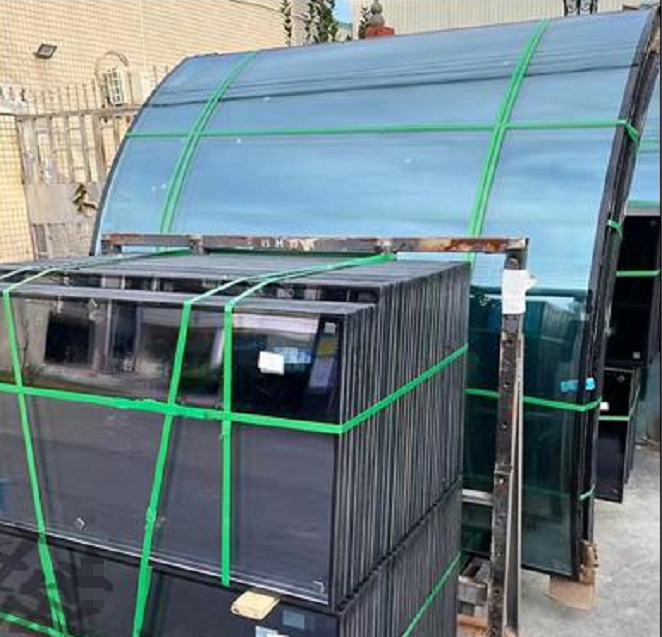
Selling a heating lamp is the easy part. Anyone can do that. But getting your tempered glass to actually pass a fragmentation test? That’s where things get messy. Most shops treat stress removal like they’re buying lightbulbs—they just find a lamp with the same wattage and length as the old one, plug it in, and pray. We don’t do that. Here is the thing about residual stress: it’s all about the temperature gradient. If your cooling is off or the reheating is patchy, you end up with these “permanent” stress patterns. Then, out of nowhere, your glass just decides to shatter. And no, you can’t just crank up the power to fix it. In fact, that usually makes it worse. We focus on the heat flux. If your lamps are too far apart, you get cold spots. Too close? You might blast right past the glass transition temperature. That’s why we won’t just ship you a box and wish you luck. We come on-site. We want to see the actual surface temperature of your glass, not some theoretical number on a lamp’s spec sheet. Then there’s the heat density. Take a 2kW shortwave lamp. It hits the surface with a massive amount of energy, and it does it fast. If your ramp-up time isn’t dialed in perfectly, you’re looking at thermal shock. We spend time looking at your conveyor speed and the exact gap between the lamp and the glass to make sure it’s just right. Plus, we often find people are using the wrong wavelength. Shortwave is great for a quick hit, but if you’re working with thicker glass, you need the heat to soak into the core. You need a different spectral distribution for that. But there’s a trade-off. Sure, high-density heating lets you push more glass through the line. But it puts a huge strain on your power supply and your cooling fans. Before we suggest a higher-wattage array to solve your stress issues, we check your electrical panels. There’s nothing worse than wiring everything up only to have the whole system trip the second you flip the switch. We find those bottlenecks before they become a headache.