Dealing with the Headache of Wide-Format Low-E Glass Preheating
If you’re running a production line wider than 3 meters, you already know the struggle. You can’t just buy a few standard lamps and hope for the best. You’ll end up with cold spots, uneven heat, and—worst of all—glass that cracks right when you’re in the middle of a run. That’s why we build custom continuous infrared units. We focus on getting that heat perfectly even across the whole width, so you can actually stop worrying about your annealing process.
The struggle of going big (3+ Meters)
Scaling up isn’t as simple as just making the quartz tube longer. If you do that, you run into a nasty problem: voltage drop. Basically, the ends of the lamp start running cooler than the middle. To fix this, we obsess over the filament geometry and voltage. We make sure the wattage stays consistent every single centimeter of the way. Then there’s the heat itself. When these things get hot, they want to sag. If the tube bows, your heat flux goes wonky. We use heavy-wall quartz to keep everything rigid and straight, even when it’s glowing.
What’s actually inside
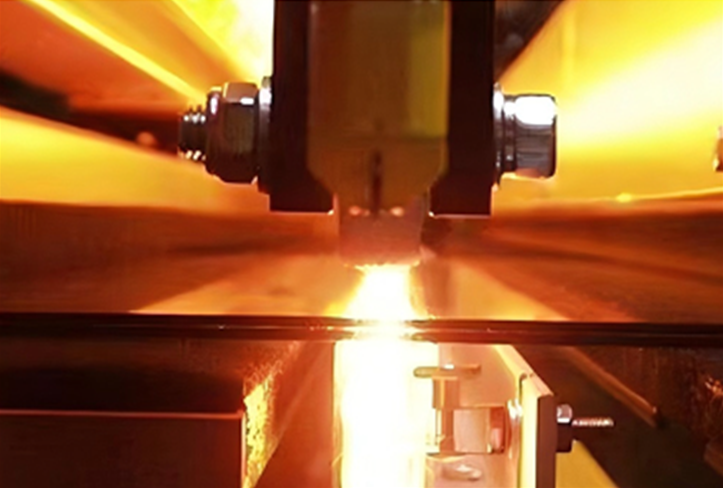
We stick with shortwave infrared. Why? Because it hits the glass surface faster. In a Low-E coating line, you need to ramp up the temperature now, not in ten minutes. Shortwave gets the job done quickly. And we’ve had enough of flimsy connectors. We’ve all seen those cheap clips that snap or oxidize the moment things get hot. We don’t do that. We use reinforced terminals that are bolted or clamped down tight. They can take a beating during installation and they won’t quit on you.
The real-world trade-offs
The big win here is that you have fewer gaps between lamps. That means you get rid of those annoying “zebra stripes” on your glass. The thermal profile just feels more stable. But, let’s be honest: 3-meter tubes are delicate. One wrong move during shipping or a clumsy bump during install and you’ve got a cracked tube. A couple of tips before you start: Make sure your mounting frames are dead-on aligned before you even think about sliding the units in. Also, these things put out a massive amount of heat. Double-check your exhaust hoods. If they aren’t sized right, you’ll end up frying your control electronics.